 WhatsApp
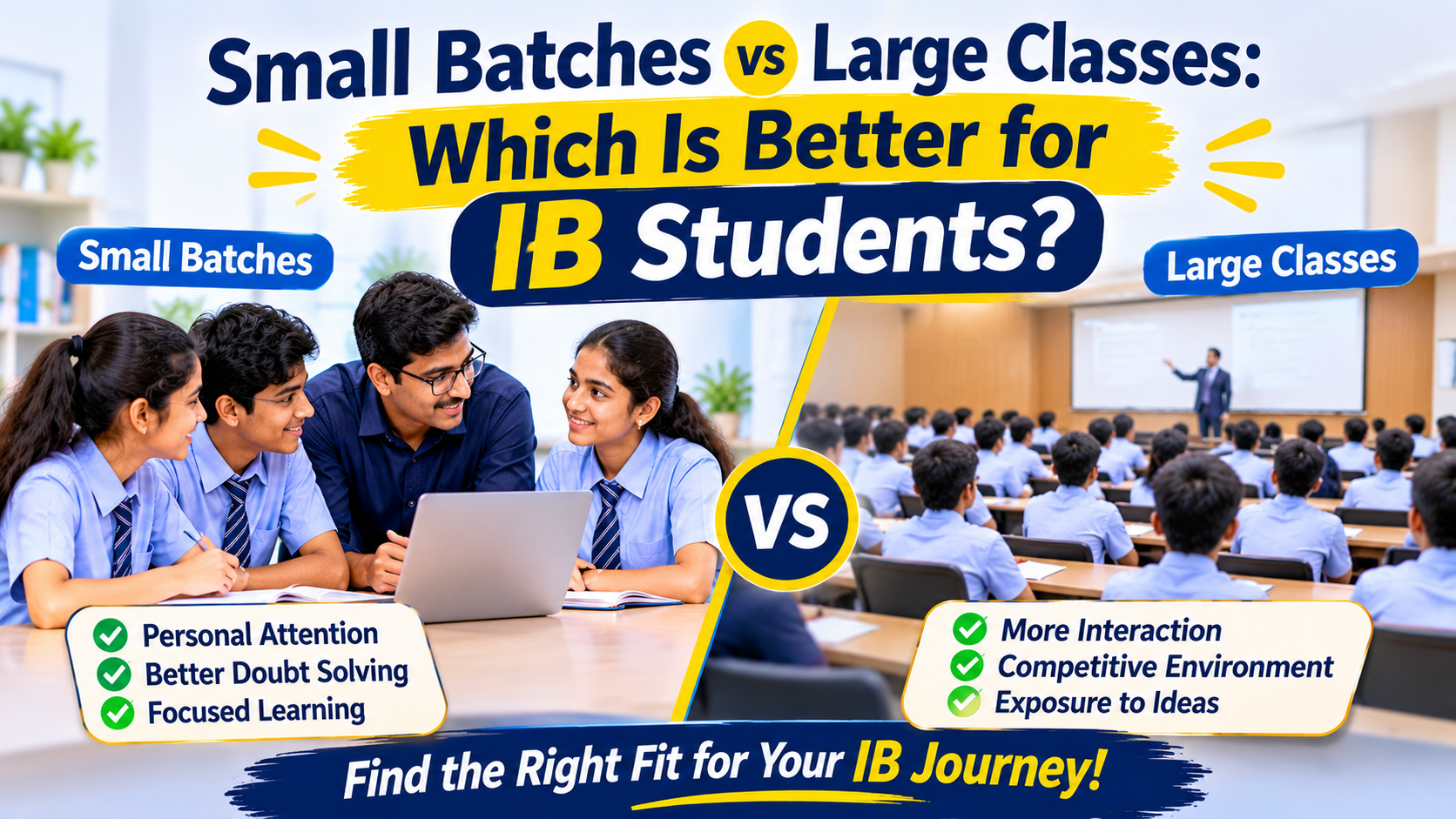
Small Batches vs Large Classes: Which Is Better for IB Students?

Compare class sizes by student participation, feedback, peer learning and the kind of support that fits an IB learner.
Class size changes the learning experience
In a smaller group, students may have more chances to ask questions and receive individual feedback. Larger classes can bring a wider range of peer discussion and perspectives. The effect depends on teaching, lesson structure and how actively students participate.
Compare what happens during a lesson
Ask how often students solve problems themselves, how tutors check understanding and how mistakes are addressed. A small class is not automatically effective if students remain passive, and a larger class can still be engaging when the teacher makes room for discussion and feedback.
- Ask how students get help when stuck.
- Find out how progress is monitored.
- Consider whether the student learns well with peers.
Choose based on the student's needs
A student seeking frequent individual check-ins may prefer a smaller setting. Another may enjoy collaborative discussion and learn from classmates. Consider the subject, current confidence, schedule and the student's own comfort.
Try the format
A demo or discussion with the centre can help families understand class routines and current group sizes. Ask what happens if a student needs extra clarification and how the plan connects to their IB course.
Frequently asked questions
Are small classes always better for IB tuition?
Not always. Teaching quality, participation, feedback and fit with the learner all matter alongside class size.
What class size is right for an IB student?
The best fit depends on how the student learns and what level of feedback they need. Ask centres about current arrangements.