
 WhatsApp
IGCSE Exams Coming Soon? 10 Preparation Tips Every Student Should Follow

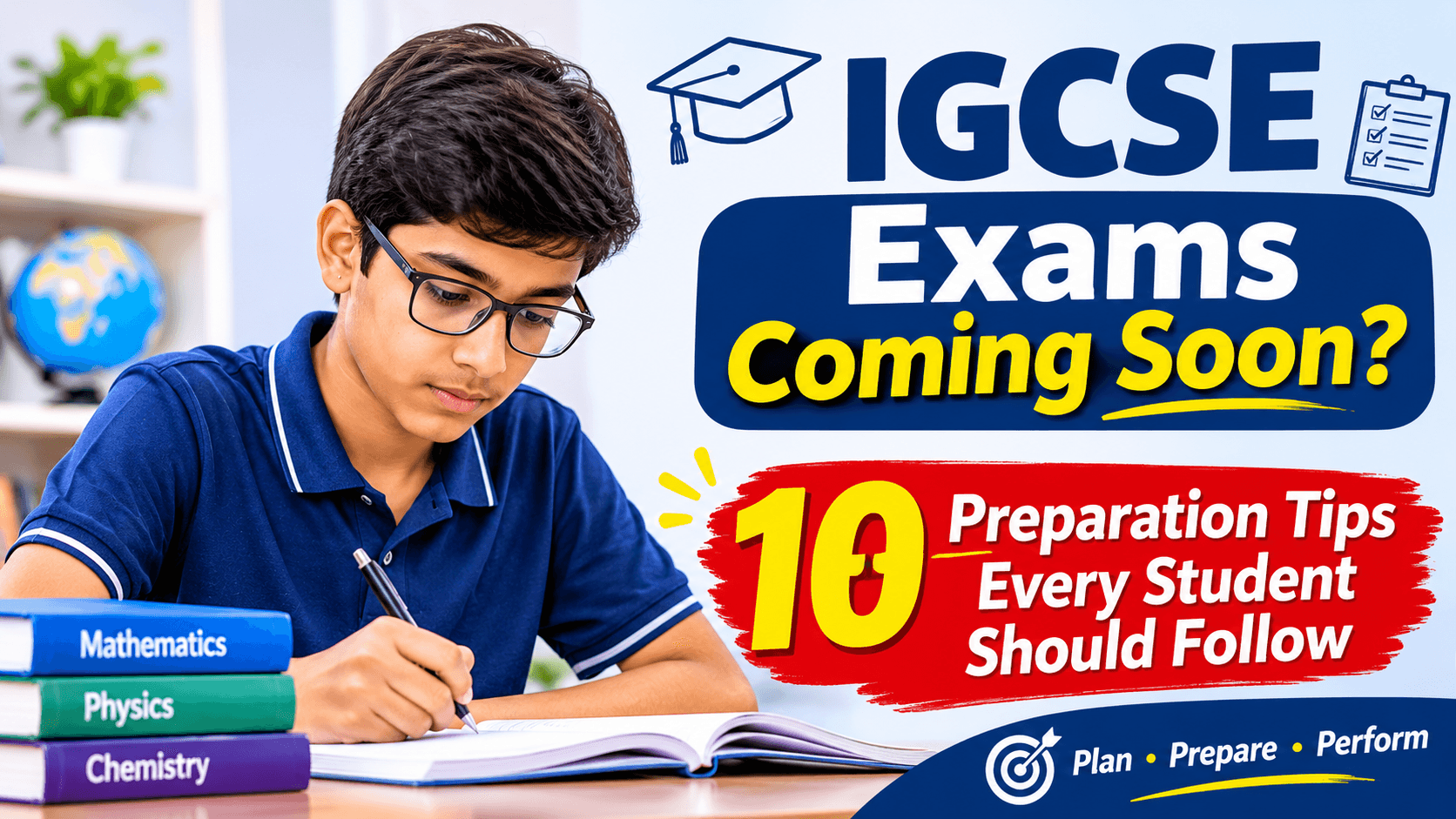
Plan IGCSE revision with the correct syllabus, active recall, past-paper practice and a realistic review schedule.
Build revision around the correct syllabus
Start with the syllabus code and assessment route provided by the school. Make a topic checklist and mark each item as secure, developing or not yet practised. This avoids spending time on material that does not match the student's course and shows where to focus first.
Use active study methods
Recall key facts without notes, explain a process, solve problems and check the result. Use short focused blocks with a clear output. For subjects with practical, coursework or alternative assessment components, follow the teacher's instructions for those requirements too.
- Space topic reviews over several days.
- Mix topics once core methods are familiar.
- Keep an error log and revisit its patterns.
- Take breaks and protect sleep during revision.
Use past papers as learning tools
Select past-paper questions that match the student's syllabus and component. Begin with topic questions, then progress to mixed and timed sections. Review mark schemes and teacher feedback carefully: note missing reasoning, command words, units or explanation, then practise a similar question.
Plan the final weeks realistically
Work backwards from confirmed school dates and allocate sessions to specific subjects and skills. Leave buffer time for difficult topics and make room to correct practice work. Avoid trying to complete every paper in a rush; deliberate review is what turns practice into learning.
Frequently asked questions
When should I start IGCSE exam preparation?
Start with the school calendar and current level of understanding. Earlier, steady topic review leaves more time to address gaps than a final-week cram.
Are past papers enough for IGCSE revision?
Past papers help with application and format, but should be combined with learning and reviewing course concepts using the current syllabus.