
 WhatsApp
Why Is Personalised Learning Important for Academic Success?

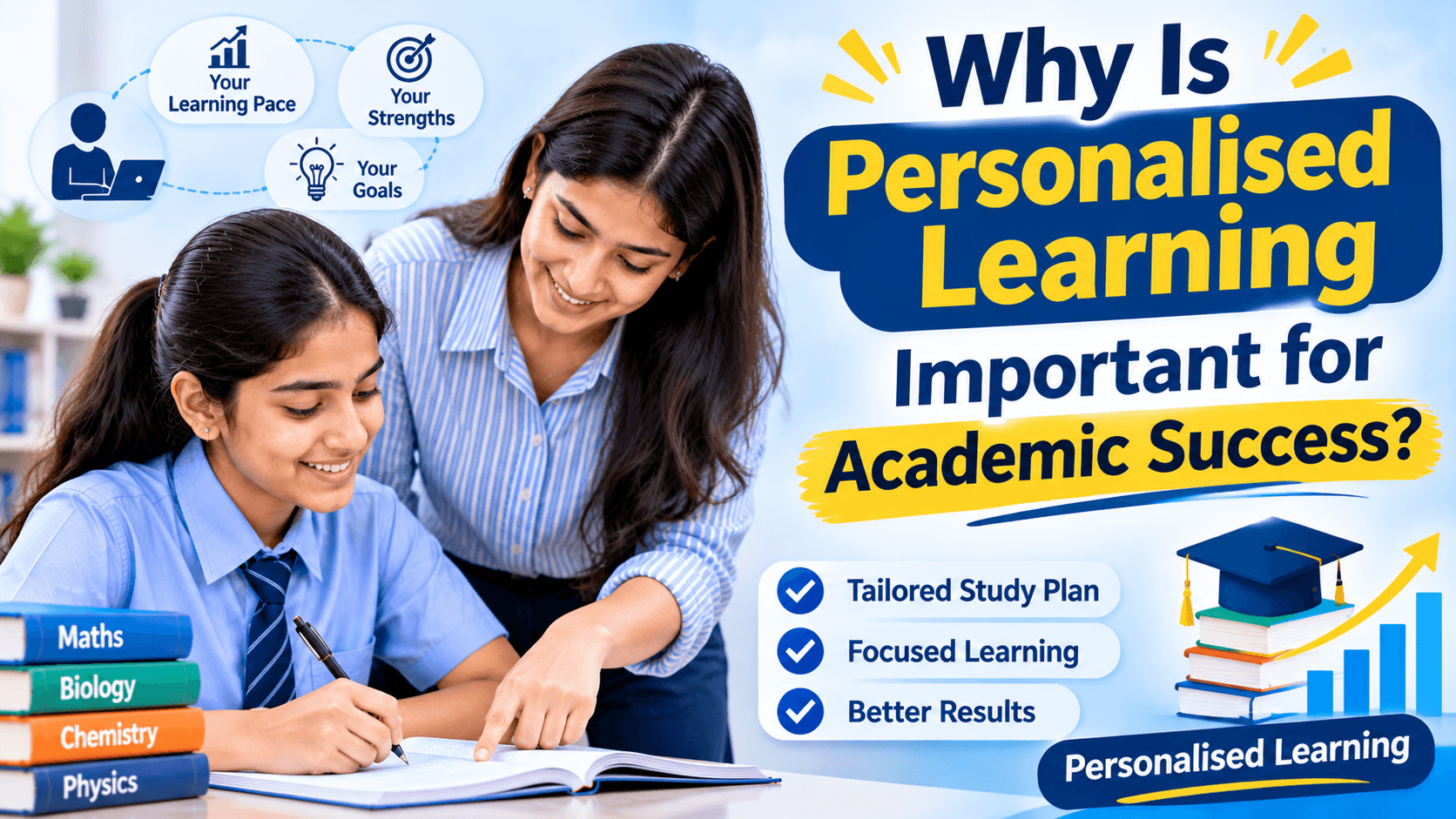
See how clear goals, responsive teaching and feedback can help students make meaningful progress in school subjects.
Students bring different strengths and questions
Learners vary in prior knowledge, pace, confidence and interests. Personalised learning starts by understanding what a student can already do and where a next step would help, rather than assuming the same explanation works for everyone.
Set goals that can be observed
A useful learning goal describes something the student can demonstrate, such as explaining a concept, solving a class of problems or using feedback to revise an answer. Clear goals help students and teachers notice progress and adjust support.
- Use current work to identify priorities.
- Break difficult skills into manageable practice.
- Give feedback that points to an actionable next step.
Keep the learner involved
Students build independence when they understand why they are practising a skill and can reflect on what changed. Encourage them to ask questions, explain their reasoning and take part in planning their study routine.
Personalise within course expectations
Support should remain aligned with the student's school curriculum and assessment guidance. Families can share teacher feedback and ask how extra practice connects to current class learning.
Frequently asked questions
Does personalised learning mean one-to-one tutoring?
Not necessarily. Teachers can adapt goals, practice and feedback in individual or group settings.
How do we know if learning support is working?
Look for progress on agreed skills, clearer independent work and the student's ability to use feedback.